
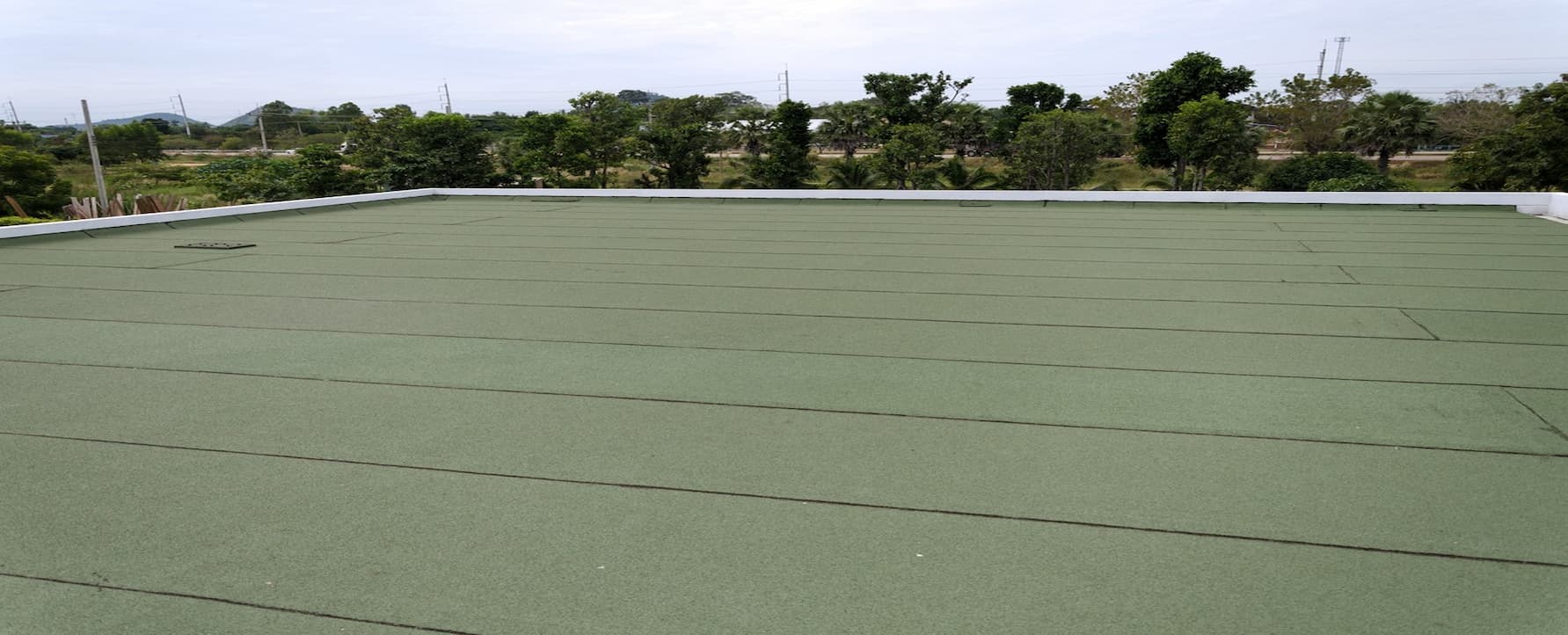

Smooth or Granule? Choosing the Right Waterproofing Layer for Your Project .
Quick Answer:
Picking the correct waterproofing membrane is more vital than many people realize. Using the wrong type can cause leaks, premature damage, and expensive repairs later on. The most common choice when it comes to bitumen waterproofing systems comes down to two options: smooth membranes and granule-surfaced membranes.
Both systems have similar installation methods and technical performance. But there’s one important difference that determines where each membrane must be used: whether or not the roof will be exposed to sunlight and weather.
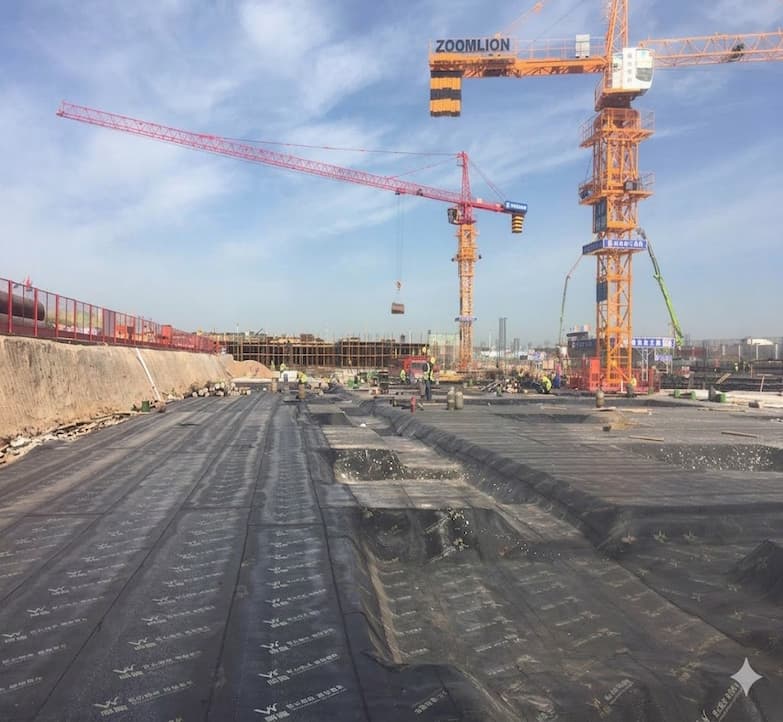
Smooth Membrane (Non-Granule / PE Film)
Best for Base and Intermediate Layers
Smooth bitumen membranes are commonly utilized as the main layer in multi-layer waterproofing systems. Their smooth PE film surface allows strong torch bonding and excellent flexibility during installation.
Key Benefits:
Provides reliable structural waterproofing
Flexible and easy to apply with torch systems
Ideal for base and intermediate waterproofing layers
Suitable for roofs that will be covered or protected after installation
It’s important to note that smooth membranes are not designed for long-term direct exposure to sunlight. Instead, they require an additional protective layer, like mortar screed, concreted topping, tiles, or insulation systems.
Best Applications
Inverted roofing systems
Roof decks with foot traffic
Roofs that will be tiled or paved
Protected waterproofing assemblies
Granule Membrane (Mineral Surface)
Best for Exposed Top Layer
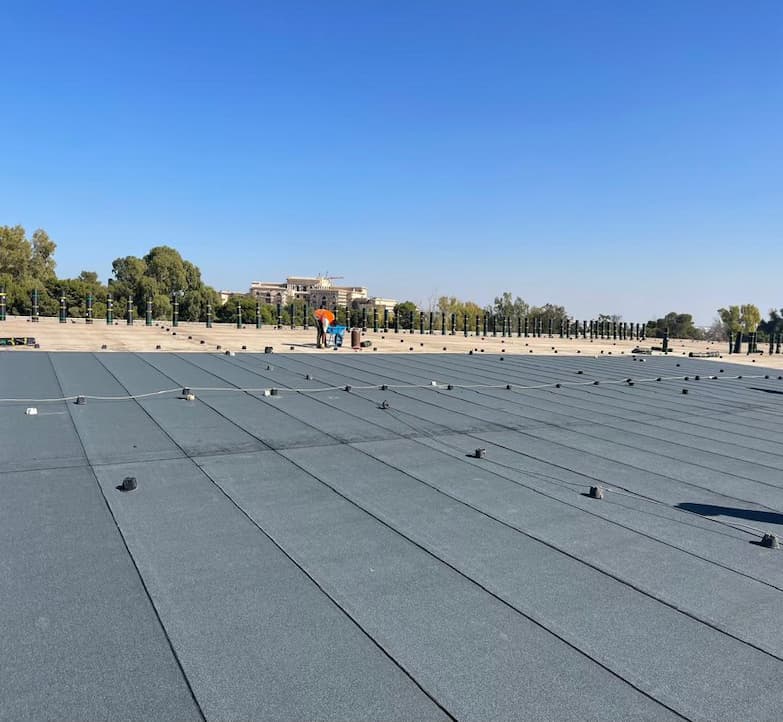
Granule-surfaced bitumen membranes are designed for exposed roofing applications. The mineral granules on the surface help shield the membrane from UV rays, heat, rain, and weathering.
For non-traffic roofs, this system is often the more practical and cost-effective solution.
Key Benefits:
Designed for direct roof exposure
Protects against UV radiation and harsh weather
Eliminates the need for additional mortar screed protection
Helps reduce labor time and installation cost
Provides extra surface durability for exposed conditions
The membrane is already protected and ready to withstand outdoor exposure after installation.
Best Applications:
Warehouse roofs
Factory roofing systems
Residential flat roofs
Non-traffic exposed rooftops
The Main Difference: Exposure Protection
| Feature | Granule Membrane | Smooth Membrane |
| Surface Finish | Mineral granules | Smooth PE film |
| Suitable for Exposed Roofs | Yes | No |
| UV & Weather Resistance | Built-in protection | Requires covering |
| Mortar Screed Needed | Not required | Required |
| Installation Time | Faster | Longer |
| Overall Labor Cost | Lower | Higher |
Why Many Contractors Prefer Granule Membranes for Exposed Roofs
Granule membranes simplify the entire waterproofing process for standard non-traffic roofs.With smooth membranes, installation doesn’t end after torching the membranes. A separate protective screed layer still needs to be added before the system can handle exposure. This means the project requires additional materials, labor, and curing time.
Granule membranes eliminate that extra step. The roof can be completed faster and with fewer overall costs because the mineral surface already provides UV and water protection.
Installation Comparison
| Step | Granule Membrane | Smooth Membrane |
| Surface Preparation | ✓ | ✓ |
| Primer Application | ✓ | ✓ |
| Membrane Installation | ✓ | ✓ |
| Overlap Sealing | ✓ | ✓ |
| Protective Mortar Layer | ✗ Not Needed | ✓ Required |
| Ready for Exposure | ✓ Immediately | ✗ After Protection Layer |
If you’re planning to pave your roof, top it with a concrete slab, or it’s heavily trafficked by vehicles or pedestrians, you should consider a smooth membrane as your waterproofing engine. On the other hand, using a smooth membrane on a standard, fully exposed, non-traffic roof adds unnecessary days, extra labor costs, and heavy material weight to your project. Choosing a granular bitumen membrane eliminates the need for a protective concreted topping entirely. It can help you save a massive amount of money and time while still providing superior durability.
Which One Should You Choose?
If you’re not sure which waterproofing system is ideal for your project, send us your project details and get a customized recommendation within 24 hours.